segunda-feira, 6 de março de 2017

Jogos de Tabuleiro - Stronghold Undead


Stronghold Undead

$34.95 SRP

Stronghold: Undead is a re-balancing of the original Stronghold: Undead expansion for the second edition of Stronghold. This expansion introduces rules for gathering mana, spell casting, and terror. Along with new buildings and abilities for the Defender, Stronghold: Undead includes a brand new map with new routes for the Attacker to breach the walls.  


RPG - Blue Rose Narrators Kit


Blue Rose: Narrator's Kit

$19.95 SRP
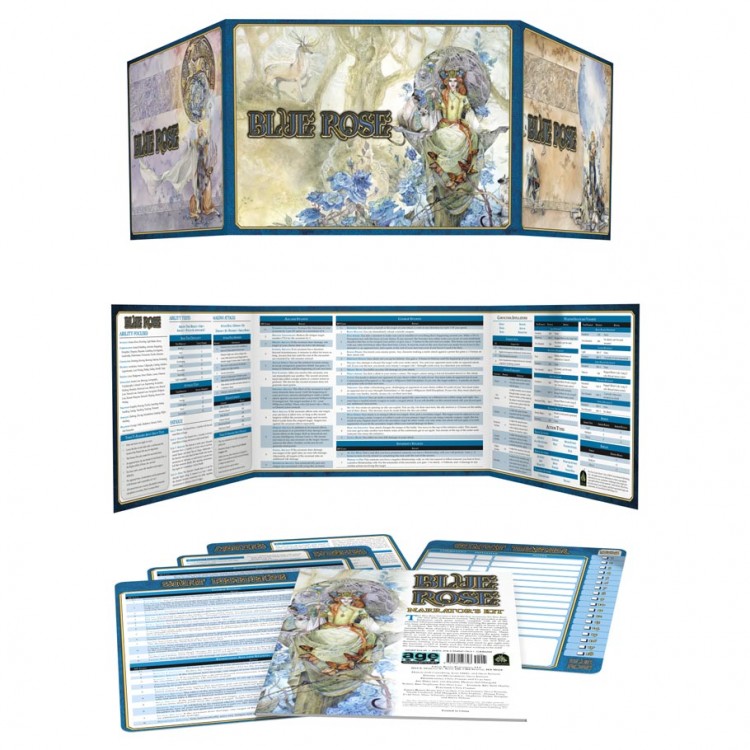
The Narrator's Kit is a key accessory for your Blue Rose RPG series. It features a three-panel hardback screen with all the essential game info you need at the table, and a booklet with 7 optimizable pre-generated characters. It also includes 4 quick reference cards that put the stunts and actions at your fingertips, and a combat tracker that you can write on with wet or dry erase markers. 

The Narrator's Kit is the perfect complement to the Blue Rose RPG and will help you kick off your game with style.  

Miniaturas - Heroclix Deadpool & X-Force


Marvel HeroClix : Deadpool & X-Force

Deadpool & X-Force pushes the Marvel HeroClix envelope with never-before-seen gameplay, shocking cracks in the 4th Wall, and a very special figure that we'll be keeping secret for quite some time!

Longstanding HeroClix favorite Wolverine returns, alongside Doop and WizKid, plus build fun, new teams around X-Statix, the Unbeatable Squirrel Girl, and Mercs for Money!

Marvel HeroClix: Deadpool &  X-Force Booster Brick (10)
Featuring a selection of friends, foes, and henchmen, Marvel HeroClix: Deadpool &  X-Force introduces 80 figures to play and collect! Offered in 5-figure boosters packed in 10-count bricks.
SKU: WZK 72536
SRP: $129.90
 
Marvel HeroClix: Deadpool &  The Uncanny X-Force Fast Forces Pack
Featuring Deadpool along with members of The Uncanny X-Force - Wolverine, Fantomex, Psylocke, Cable, and Domino - the Marvel HeroClix: Deadpool and The Uncanny X-Force Fast Forces Pack includes six HeroClix figures with all-new dial designs, a rules sheet, and a Web ClixFX base.
SKU: WZK 72538
SRP: $16.99
Marvel HeroClix: Deadpool Dice & Token Pack
Marvel HeroClix: Deadpool brings Dice and Token Packs to your tabletop with two custom dice showcasing a Deadpool icon and six action tokens featuring the Merc with a Mouth, himself!
SKU: WZK 72540
SRP: $9.99

domingo, 5 de março de 2017

RPG - Introduzindo o Horror em Campanhas de Fantasia Medieval


Thanks to movies like The Lord of the Rings trilogy, and the Harry Potter and Star Wars seriesgeek culture has become a big part of the mainstream—which means roleplaying games have also become more widely accepted. They’re no longer the games geeky boys play in their parents’ basements. Now they’re games everyone plays, even movie stars like Vin Diesel.

Along with their growing acceptance, there’s a wider variety of people designing games, so there’s been an explosion in the types of roleplaying games being published. There are games about a couple going through a breakup, surviving in a Mad Max-like future, characters fumbling their way through a crime-gone-wrong, vampires as spies, and, of course, a wide variety of science fiction and fantasy games. In addition, there are games that are almost purely narrative, with little or no dice involved, very tactical games that use maps, miniatures, and dice, and more games that fall between those two extremes. If there are fans of any genre or style of play, there’s a roleplaying game for them.
The hope for this column is that it will point you toward games you may not have known about or considered playing, but it also exists to help people think about games differently; to consider why games are run the way they are and provide tips on how to run (or play) games that are more satisfying for everyone at the table.

In this month’s GTM, there are a couple of big releases that draw their inspiration from different genres. The first is Curse of Strahd, the next big adventure from Wizards of the Coast for Dungeons & Dragons, which draws heavily on the horror genre to deliver a different sort of adventure for your heroes. The second is the Spymaster’s Handbook from Paizo for the Pathfinder Roleplaying Game, which draws on the espionage genre while still being rooted in a fantasy setting.

~ Running Horror ~
Every genre has its own rules, tropes, and role for the heroes. When you’re thinking about running or playing in a game with a different genre, you should familiarize yourself with what makes a story in that genre effective and interesting. Everyone has an intrinsic understanding of what makes one genre different from another, but understanding them a bit more fully can make your time at the table more entertaining and fulfilling.

In horror-themed games:
  • The heroes are often trapped or isolated so they have no one to call on for help.
  • The setting is usually dark, with flickering candles and concealing shadows. The darkness also gives a sense of claustrophobia or uncomfortable closeness.
  • There are sounds that are unsettling, unusual, or create a sense of tension.
  • The unknown is always threatening.
  • Everything is engineered to elicit a sense of fear, dread, or panic from the audience.

Horror works so well in movies and television because they synch sight and sound with the story being told to create an effect that’s more than the sum of their parts. In roleplaying games, these things are a bit trickier to coordinate, but tips for running horror games often include dimming the lights or playing by candlelight and putting on mood music—or better yet, using sound files or an app to trigger sound effects at the right moments to really make an impact. 

Those things can be effective, but they can also it hard to see the dice, see your character sheet, or read rulebooks. In addition, unless the music is simply atmospheric, it can include musical cues that occur at the wrong time and disrupt the flow of scenes. Which is not to say these devices can’t add a little flavor, but don’t rely on them alone to make your horror game scary.


The best tool you have to build tension is “buy in.” If you and the other players can come to the table with the understanding that you all want to be frightened. This can be difficult to maintain every minute of game night, but understanding that your characters are in a horror story, that things might scare them, and that they should react appropriately goes a long way towards making the story scarier. If, in the case of Curse of Strahd, you’re running a fantasy game with lots of horror conventions layered on top, it can be tricky to play scared. The reason for this is because in fantasy games you typically play a super-competent hero, while in horror games your hero should feel overwhelmed and at a disadvantage. 

Those two things don’t play well together and the first thing most players think when their fantasy hero sees a zombie is, “If I hit it hard enough, it will fall down.” Whereas, when a hero in a horror game sees a zombie, the player should feel tense because they don’t know if the zombie can be killed easily or if it’s a deadly threat. Resolving to have your character react in a more “horror” way will go a long way toward making your horror-themed way more satisfying.
One thing to remember when playing in a horror game is that by having your character run away, or react differently than you might have it do normally, is that by doing so you’re not “losing the game.” 

Players in roleplaying games hate, hate, hate to lose. They hate to be defeated, killed, locked up, or admit defeat by running away. And to a lot of players reacting sub-optimally feels like losing. In the horror genre, it’s acceptable to run away—you are after all facing terrible, undead monsters who want to eat your soul. A little irrational fear is warranted. When you have your character react in such a way, you’re not losing, you’re playing differently and allowing the other players to enjoy your fear and giving the gamemaster a chance to set up an even cooler encounter.

~ Running Espionage ~
Spy movies and shows are a lot of fun. They’re filled with lots of henchmen to get in the way of suave, rugged heroes, with missions that revolve around rescuing someone or stealing (or recovering) stolen information that can be turned to evil devices. Anyone familiar with the James Bond movies or the Alias TV show should recognize these tropes along with the following:
  • Secrets, within secrets, within secrets…
  • Organizations arrayed against each other, one acting as protector and one as aggressor.
  • Betrayal is inevitable and comes from unexpected quarters.
  • The villains are truly evil and have mad schemes to upset the status quo.
  • Roleplaying scenes carry as much weight as action scenes because you learn new information.
In many ways, a typical espionage game is very similar to your standard fantasy game. None of the tropes listed above is out of place in a fantasy game or novel. The keys to making your game feel like it’s a spy game is to concentrate on secrets, uncovering information, infiltration over combat, and cool set-piece battles that make the heroes look awesome—especially at the climax of the story when the heroes have to make a final push to crush their enemies’ plans.

As with horror games, players need to change their approach in spy games. Instead of kicking in the door and killing everyone in sight until they find the character they were sent to rescue, characters in an espionage-style game should sneak in, removing only those threats they have to confront directly, and extract the person they were sent to get. Sure, things will go wrong somewhere along the way and descend into a battle, but even then the players’ goal should be to escape, not kill everybody in the place.

~ Description is Your Friend ~
The most important tip when running any genre of game that’s different than what you normally play is to use description well. Don’t overload players with pointless and useless information, but don’t be afraid to add touches of narration that add to the overall feel of the game. Think you can gross the players out with some added details about flies excitedly feeding on blood-covered earth? Go for it! It’s details like that that make scenes feel more real and disturbing. That’s exactly the sort of thing you want to give your players!

~ Game On! ~
Take a look at all of the roleplaying games and supplements offered this month and see what interests you. If you can, check out a new game and see if your friends are interested in playing in a different setting or different genre. It’s just as fun to change up the RPGs you’ve been playing as it is to try out different board games. You may find a new favorite!

Jon Leitheusser is a writer, editor, and game developer. He published the Dork Tower comic book, was the HeroClix game designer for years, was a content designer for Champions Online and Neverwinter, has been the Mutants & Masterminds game developer for Green Ronin since 2008, and freelances for a number of different companies. He cut his gaming teeth on Advanced Dungeons & Dragons and still games twice a week with his friends online or in person. He lives in Renton, Washington with his wife and a mean cat.

Como Realizar Pinturas de Miniaturas - Parte 1


Um Oferecimento de Tintas Vallejo!

As melhores do mundo!!!

Everyone prefers a painted figure over an unpainted one.  They are easier to distinguish, each painted figure possesses its own sense of character and uniqueness, and, generally, painted figures improve the gaming experience for all involved.

The benefits of painting aren’t just limited to hobby war games either.  Roleplaying games and even board games can get a boost out of it, as well.  I know if I see a board game with lots of well crafted, highly detailed figures for playing, the first thing I want to do is paint them to make the game that much more visually engaging.

Now, it’s important to remember, especially as one gets started, painting is not just about creating great works of art or museum-quality displays.  Painting is first, foremost, and always about your enjoyment with the creative process.   
So, how do we get started?
Fortunately, there are options available to make it easier to build both your skill and your available palette of colors:  Paint Sets.

Assembled with a given theme, or type of miniature in mind, paint sets lower the bar for entry into painting by making it simple for beginners and enthusiasts with little to no experience in painting to pick up what they need to get started.

In this, and upcoming installments, we are going to examine some of these paint sets, what kind of projects they are most useful for, and include some samples of how they can be used to increase your skill set and spread the enjoyment of painted figures.

For our first entry into this article series, we will begin with the Game Color: Avatar Set from Acrylicos Vallejo (VAL 72211).  With a MSRP of $49.05, this set is a complete package: it comes with eight 17 ml. game color paint bottles, a Toray brush, plastic palette for mixing, a metal miniature, and a painting guide.


The eight colors included in the Game Color: Avatar Set are:
  • 72.010 Bloody Red
  • 72.030 Goblin Green
  • 72.038 Scrofulous Brown
  • 72.051 Black
  • 72.098 Elfic Flesh
  • 72.140 Heavy Skintone
  • 72.153 Heavy Brown
  • 72.154 Heavy Siena

This set’s most obvious use is as an introductory to painting, but it also has value for anyone with some painting experience who may want to broaden their skills and will serve our purposes. (though, I will “cheat” by using some additional materials as you will see below!)   

The painting guide enclosed in this paint set has clear instructions on paint mixing, layering paint to create shading, proportions for mixing to produce the desired colors, and will even show you the basics of creating non-metallic metal effects.  Best of all, the mixing proportions are given as percentages, allowing you to use the dropper bottles to dole out the proper amounts of each color with no guesswork needed!

I began by cleaning the miniature, filing down any mold lines, and affixing the figure to its base.  Once that was finished, I moved into priming the figure.  While not included in the paint set, the Vallejo White Primer is recommended for highly detailed miniatures as the spray pattern is very fine and even, allowing for good coverage while not covering up detail.  After the primer dried I moved straight into the base coating.


To start, I followed the recommended mixing suggestions for the base colors on the figure.  A good, deep brown color, that’s not too dark, like this is a great start for the kind of final effect I want. The reddish-brown color for the hair will give me a nice red tinge to the hair color without looking too cartoonish. Goblin Green with a bit of Black is a great base color for the Goblin head. (Under the left foot!)

After letting the basecoat dry, I went back over, and started applying layers of color, going from darker to lighter, over the initial colors using a drybrush technique.  While not something that’s covered in the instructions, I find the technique useful for quickly and easily picking out raised details, or creating a blended gradation of color when working on fleshy areas.  It’s also easier for beginners.


Using this method I was able to bring the overall color of the model to a nice flesh tone, while keeping the folds of skin darker to give the figure more depth.  The hair looks like a more natural brown color with a reddish undertone.
After that layer dried, I moved on to smoothing the flesh tone into a more even color. 

I did this first by creating a wash by heavily diluting the Heavy Sienna paint and going over the miniature, and then by applying a really light layer of dry brushing with a brush almost entirely devoid of paint.  Repeated motions over the figure let me get it to the final color I wanted.  Using this wash on the hair and beard I was able to darken up the red undertone a bit to help it blend in more to the highlights.

Now I move to filling in the model’s details.  The paint set instructions will show you how to create a nice metal effect without metallic paints, but I have other things in mind for this miniature (I also plan to make use of this figure doing some special effects work at a later time – stay tuned!), so I cheated again at this stage by reaching into my other paints for some nice Bronze.  Bronze is a great color for showing age on items, without making them look like they were not cared for. 

With the bronze in place on the hammer, cuffs, and beard adornments, I went back and lay down a layer of black on the haft, gauntlet, and fur cuffs of the boots and then colored the Dwarf’s (very) prominent eyebrows.  I then went back to wash I’d made previously and I used this to bring some depth and a slight tarnish effect to the bronze sections.


Next, I went in do so some of the final details.  I mixed a deep grey color to brush over the chain and gauntlet to give it the appearance of iron.  Mixing some of the Elfin Flesh with a bit of Bloody Red gave me a nice, fleshy pink color for the inside of the goblin’s mouth.  A bit more of the red mixed with water, let me put a finishing wash on it.  

Dry brushing brown on the haft gives me a leather and wood look, while dry brushing the grey on the boot cuffs finishes the fur.
Finally, taking the Elfin Flesh and lining the raised areas and edges on the flesh of the skin gives the figure more definition and makes the features pop.  A slightly heavier line along the scar across the right eye makes it really stand out.  A couple of quick drybrush layers on the skull worked it up to a good bone color. Finally, I went over the gauntlet with the grey color I mixed to highlight it’s edges. I finished it off by painting the base in preparation for any future basing.  When everything is dried, I put a nice matte sealer on it to preserve the work.

Overall, this is definitely a quick and easy-to-use set.   The included instructions are easy to understand and follow, and they clearly demonstrate how to make the most versatile use of the included materials.  Other than the Primer, Sealer, and Bronze color, all the painting I did here used only the materials that came in the set.


Painting and modeling can be one of the most intimidating parts of gaming but it can also be one of the most rewarding! In my experience, I have found that the look of pride in a gamer’s eyes the first time they play with a miniature that they painted is worth the time and investment. I hope that the advice and techniques described in this article have helped to inspire you to pick up the brush and grab some paints!

sábado, 4 de março de 2017

Sorteio de Produtos Pokemon Boosters Triplos


Se você gosta de concorrer a uma promoção e gosta de carda colecionáveis, entre já na nossa promoção!

Sorteio de 2 Packs Triplos de Boosters + Carta Promocional!

É só curtir a página do facebook e compartilhar nossa página!


Boa Sorte!!!

sexta-feira, 3 de março de 2017

Sgina-nos no Twitter


Se você gosta do Twitter, você pode nos seguir na nossa conta oficial!


Aproveite e Conheça essa nossa nova ferramenta de divulgação!!!


Curta nossa Página no Facebook Também!!!


Como não podia deixar de existir e co-existir com nosso BLOG, temos nosso Facebook recheado de novidades, imagens de jogos e todos os lançamentos mundiais.

Não deixe de espiar e curta nossa página!

Compartilhe com seus amigos!!!

Até mais!!!


quinta-feira, 2 de março de 2017

Savage Worlds RPG: RIFTS - Lançamento


A MEGAVERSE GONE MAD!
Prepare yourself for a railgun-shredding, mega-powered, magic flinging journey into a post-post-apocalyptic world where supernatural horrors vie with technological empires for mastery of the world. This is the world of RIFTS!
Unpredictable holes in the very fabric of space and time open the way to countless creatures, beings, and dangers. Whatever you imagine, whatever you fear, it's somewhere on this war-and-chaos ravaged world. In the battle for survival, the Tomorrow Legion brings together the greatest, the bravest, and the craziest to stand against an infinity of threats.
One day, your heroes may face a heavily mechanized patrol of Coalition Soldiers. The next, they're trading lasers and mystic bolts with a horde of cybernetic-loving demons called Brodkil. Next week, a gargantuan tentacled horror from a Rift threatens every living thing in the region, and it`s up to the Tomorrow Legion to stop it - somehow.

Letters from Whitechapel - Dear Boss Expansion


Dear Boss,
I keep on hearing the police have caught me but they won’t fix me just yet. I have laughed when they look so clever and talk about being on the right track...
There's a monster abroad in the streets of Whitechapel district, moving quietly and unnoticed through the smog and mire of industry. Each night, he kills again, and each night, the police race to close the net before the killer can escape. By morning, another letter is found in Whitechapel, taunting the Chief of Police and signed by "Jack the Ripper." The days are growing short. Time is running out for the police to catch the killer before he disappears into the twisted alleys and winding streets of Whitechapel...
You've already experienced the battle of wits between the policemen and Jack the Ripper in the cat-and-mouse struggles of Letters from Whitechapel. Now, you'll gain a host of new variants for the game with the Dear Boss expansion!
Within this expansion, you'll find three modular decks to aid the policemen or Jack, alongside rules for tweaking the balance of the game until it's perfect, no matter which side your group favors. Twelve beautifully sculpted plastic miniatures invite you to replace the Policemen, Jack, and Wretched pawns from the base game and a new Jack screen implements this expansion's variants. Finally, every inch of Dear Boss is overflowing with historical detail, giving you even more insight into the lives of the men and women who played out this tragedy in 1888.